
AI Marketing Adoption Strategy for UK Service Businesses
· 9 min read
Most businesses now use AI and most see no return from it. Here is a practitioner's AI marketing adoption strategy for UK service businesses, built around the few workflows that actually pay.
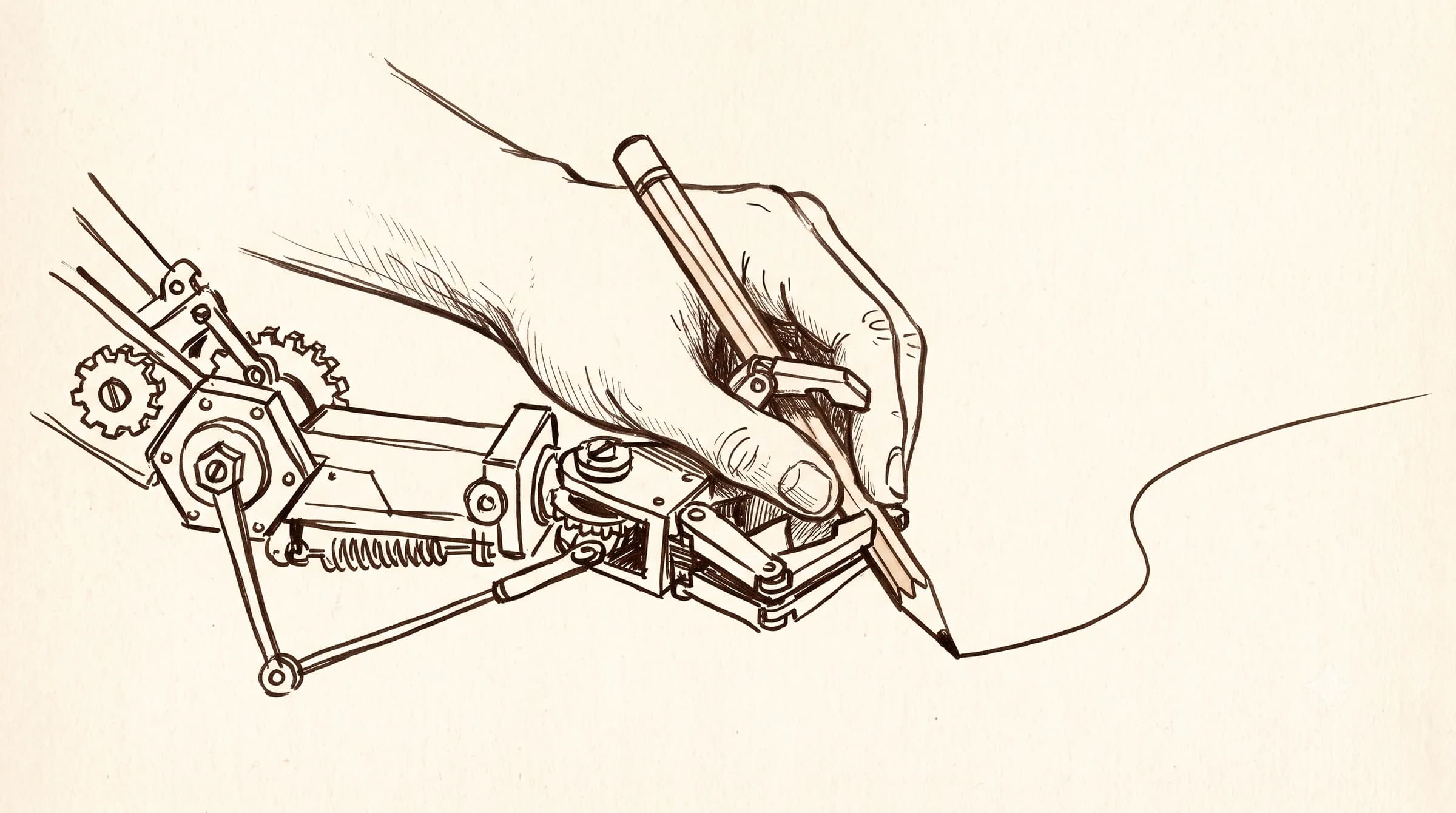
Here is the uncomfortable number behind the AI hype. Adoption has raced ahead. Results have not kept up with it.
Just over half of UK small and medium firms now use AI, 54% in 2026 against 23% three years earlier. Yet among the firms already using it, 95% say it has made no difference to the size of their workforce, and 86% say job roles are unchanged.
Most are using AI. Few can point to what changed.
| Category | Value |
|---|---|
| 2023 | 23% |
| 2024 | 25% |
| 2025 | 35% |
| 2026 | 54% |
That gap is the whole story. It is the thing nobody selling you an AI tool wants to talk about.
The businesses winning with AI are not the ones with the most tools. They are the ones using a few of them well, on the right jobs, with a human still in charge.
So this is an AI marketing adoption strategy built for that reality. Written for a UK service business that wants the return without the religion.
If you are sceptical, good. The owners we speak to are split between two honest reactions to all this.
Some are quietly worried they are falling behind and do not know where to start. Others have heard "just let the AI handle it" one too many times and read it as code for "spend more of your money."
Both instincts are right. You should not be panicked into adopting. And you should not trust anyone who waves AI at you as if the tool is the answer.
Start from there and you make better decisions than most.
The problem is not adoption, it is direction
Most advice frames AI as a race. Adopt now or fall behind. Pick from these 40 tools.
That framing is exactly why so much money gets wasted, because it treats using AI as the goal. It is not.
Getting a better result for less effort is the goal. AI is just one way to get there.
When UK service businesses adopt AI marketing badly, it almost always looks the same. Doing it well looks just as consistent, and completely different.
Adopting AI badly
- Sign up for a handful of tools after a demo
- Generate a pile of content nobody reads
- Automate something that was not the bottleneck
- Months later the subscriptions still leak and not one extra client is won
Adopting AI well
- Point it at jobs that matter to your bottom line
- Keep a person in the loop for judgment
- Stay honest about what it did and did not change
The tools worked fine. The direction was missing.
The competitive advantage in 2026 does not come from using AI. It comes from using AI well. Everything below is built on that one idea.
Buy, do not build
Start with the cheapest strategic decision you will make. For almost every service business, the right move is to buy AI capability inside tools you already understand, not to build anything custom.
The temptation, once a business gets excited about AI, is to commission something bespoke. A custom chatbot. A special integration.
For a firm of your size that is almost always a mistake. The off-the-shelf tools are capable. They improve every month without you paying for the development, and they cost a fraction of anything custom.
The sensible rule doing the rounds is that almost every small and medium business should buy, not build. It is right.
So your adoption strategy is not a software project. It is a series of small decisions about which existing tool to point at which existing problem. That is a relief, because it means you can start on Monday and stop anything that is not working by Friday.
The heart of it
The few workflows that actually pay
If AI marketing has a sweet spot for service businesses, it is a short list of high-return jobs. Ignore the rest until these are working.
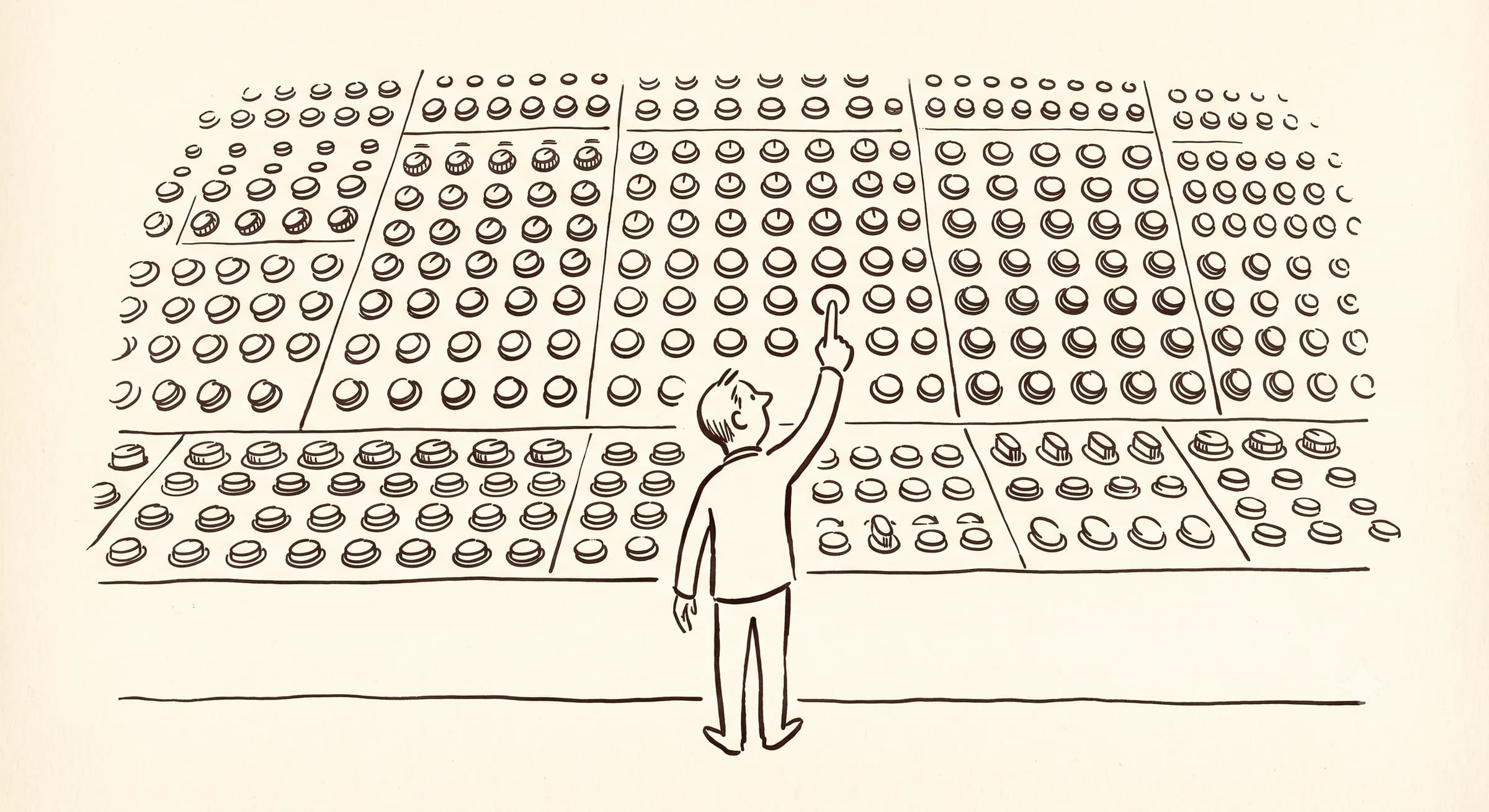
Content drafting, with you as the editor
AI is genuinely good at first drafts. Blog posts, emails, service-page copy, a blank page turned into something you can react to in seconds. But it produces a draft, not a finished piece, so the winners pair it with a knowledgeable human to edit, fact-check, and add the expertise a reader can feel.
Customer response and follow-up
Speed of response is one of the biggest levers you have, and AI helps you answer faster. Draft replies to common enquiries, summarise a long thread, triage what needs you now. Used badly it puts a robot between you and a worried client, so keep the human where the trust is.
Making sense of your own data
The underrated one. AI reads the numbers you already have and tells you what is going on, which enquiries become clients and what they really cost you. That only holds if your data is clean, which is why solid conversion tracking matters more than any AI on top of it. Feed a model rubbish and you get confident rubbish back.
Ad and campaign optimisation
The big ad platforms now run on AI, and for paid campaigns the machine handles bids and targeting better than a human could by hand. But it optimises toward whatever you tell it, so a person still sets the goal and feeds it accurate conversion data. The AI is the engine. You are still the driver.
Notice the shape across all four. AI does the heavy, repetitive part, and a human supplies the judgment, the expertise, and the accountability. That is not a limitation to engineer away. It is the whole point.
What this looks like in practice
Here is a concrete example from our own work at Njord Star. The biggest change from weaving AI properly into how we run is speed. The time from an idea to a working thing that is actually good.
For a UK probate law firm we built personalised lead magnets, custom tools that return a tailored result to each enquirer. Normally that needs a developer and weeks of time.
With AI in the loop we went from concept to a working, tested tool in a fraction of that. We built one for our own funnel the same way.
It also lets us find and fix problems in anything we have coded, fast, instead of being stuck. And it lets us point a model at several data sources at once to reason through a decision, far more productively than working from memory and a spreadsheet.
The edge is not the AI itself. It is how much faster a person who knows the craft can go from idea to a finished thing. That is the whole argument of this piece, in practice.
Why human judgment is the moat, not the bottleneck
There is a fear underneath a lot of AI adoption. If a tool can write the content and run the ads, what is left for the expert? For service businesses the answer is reassuring. Almost everything that matters.
AI is brilliant at producing average. It has read the entire average internet, so it hands you a competent, generic version of anything in seconds.
That is useful. It is also exactly why average is no longer worth anything.
When everyone can generate competent and generic, judgment is the only thing left that stands out. Real expertise. A point of view a machine cannot have, because it has never done the work.
So the businesses that pull ahead are not the ones that replace people with AI. They are the ones where a person who knows what they are doing uses AI to do more of it, faster, while keeping the parts only they can do.
A solicitor who uses AI to draft a clear explainer and then corrects it with real legal knowledge produces something a content mill cannot. An expert who uses AI to handle the busywork and spends the freed time on clients beats a competitor drowning in the busywork.
This is why the honest positioning for most service businesses is not "we use AI." Everyone says that now, so it signals nothing. It is "we know what we are doing, and we use AI to do it better."
The expertise is the moat. The AI is the lever.
How to actually start, in 90 days
The honest reason most owners never start is not laziness. It is noise.
Every other video and post claims to be the number one AI expert. The tool list runs to 40 names. It is impossible to tell the real advice from the sales pitch.
So you do nothing, which at least feels safer than wasting money.
The way out is not to learn all of it. It is to ignore almost all of it and run one small test.
Run the quick check below to see whether you are ready to pilot, or whether there is one thing to fix first.
Interactive · AI readiness
Are you set up to get value from AI in your marketing yet
Adopting AI now would scale whatever is already broken. Get the foundations in before the tools, starting with the two below.
Do these first
- Pick one specific outcome AI should help with. Vague goals waste the most time.
- Clean up your conversion data first. AI on bad data just scales the error.
Not yet. Adopting AI now would scale whatever is already broken. Get the foundations in before the tools, starting with the two below.
Here is the phased approach that works, stripped of the consultancy language.

- 1
Pick one outcome you already care about
Not "adopt AI." Something real, like "respond to every enquiry within the hour" or "publish two genuinely good articles a month without it eating my week." One outcome, chosen because it already matters. - 2
Point one tool at it for 90 days
Start on a free or cheap tier. Use it for that one job, keep a human reviewing the output, and write down what success looks like first, in business terms. Hours saved, enquiries answered fast, clients won. Not "posts generated," which measures activity, not return. - 3
Measure honestly at 90 days, then decide
Did it move the outcome? If yes, keep it and add the next workflow. If no, stop, and do not feel you failed at AI. You learned that tool did not help that job, which is what the pilot was for. - 4
Write down a basic rule for using it
A few honest sentences, not a policy document. What goes in, what never goes in, who checks the output before a client sees it. For regulated fields this is the difference between a useful tool and a compliance problem.
That is the entire strategy. One outcome, one tool, 90 days, honest measurement, a basic rule. Repeat for the next workflow. It is deliberately unexciting, because the exciting version is the one that wastes your money.
The short version
The honest AI marketing adoption strategy for a UK service business is smaller and calmer than the hype suggests. Buy capability inside tools you understand rather than building anything.
Point AI at a short list of high-return jobs. Drafting, faster response, reading your own data, optimising ads. Keep a human in charge of judgment and accuracy on every one.
Start with a single outcome, run a 90-day pilot, measure in business terms, and write down a basic rule for how you use it.
Do that and you join the third of businesses getting a real return, not the two-thirds paying for tools and hoping. The advantage was never the AI. It was using it well.
The test for any AI marketing decision is the same one that should govern every spend in the business. Does it move a number you actually care about, by more than it costs?
So before you commit to a tool, work out what a new client is worth to you and what you can afford to spend to win one. That figure is what tells you which experiments are worth running and which are just expensive theatre.
The Paid Search Validation walks through that math. And how the whole thing fits together shows where these tools sit inside one managed system, not a pile of disconnected subscriptions.